Software Development Life Cycle (SDLC)
The Software Development Life Cycle (SDLC) is a structured framework used to design, develop, test, deploy, and maintain software systems. It defines a step-by-step process that helps software teams produce high-quality software in a systematic and organized manner.
SDLC divides the software development process into clearly defined phases. Each phase has specific objectives, activities, and deliverables. This structured approach helps control complexity, reduce risks, and ensure that software meets user requirements.
In modern software engineering, SDLC acts as the backbone of project planning and execution. It provides a common understanding for developers, testers, managers, and clients throughout the software lifecycle.
What is SDLC?
SDLC stands for Software Development Life Cycle. It represents the complete life of a software product from initial idea to final retirement. The lifecycle covers everything from requirement gathering to deployment and ongoing maintenance.
The main purpose of SDLC is to ensure that software is developed efficiently, with proper quality control and within time and budget constraints. By following SDLC, organizations can avoid chaos and reduce the chances of project failure.
Need for Software Development Life Cycle
As software systems become larger and more complex, developing them without a structured approach leads to confusion, delays, and quality issues. SDLC is needed to manage this complexity and bring discipline into the development process.
Without SDLC, projects often suffer from unclear requirements, poor design, excessive rework, and high maintenance costs. SDLC introduces planning, documentation, and review mechanisms that help teams work in a controlled and predictable manner.
SDLC is also essential for teamwork. In large projects, multiple developers work together over long periods. A well-defined lifecycle ensures consistency, clear roles, and smooth coordination among team members.
Phases of Software Development Life Cycle
The Software Development Life Cycle consists of several distinct phases. Each phase focuses on a specific aspect of software development and contributes to the success of the final product.
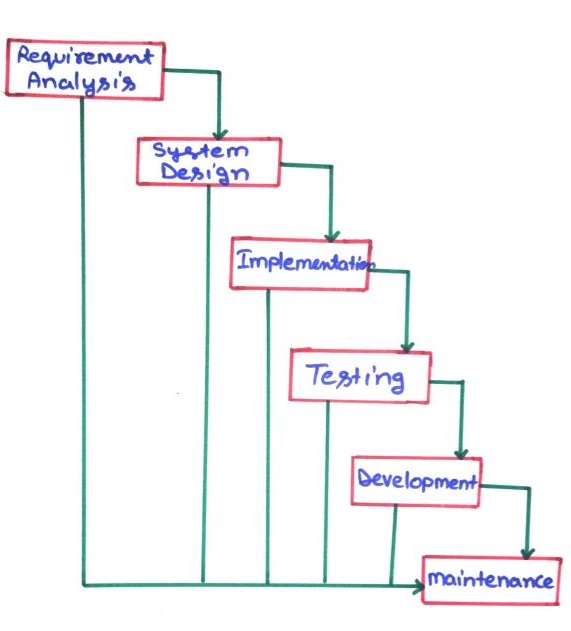
1. Requirement Analysis
Requirement Analysis is the first, foundation phase of the Software Development Life Cycle (SDLC). The success or failure of a software project largely depends on how clearly and accurately requirements are understood at this stage. In this phase, software developers, system analysts, and project managers work closely with clients, users, and other stakeholders to identify what the software system should do and how it should perform.
The main objective of requirement analysis is to gather complete, correct, and clear requirements before any design or coding begins. This helps in avoiding misunderstandings, rework, cost overruns, and project delays later in the development process. Requirements are collected through meetings, interviews, questionnaires, observations, and study of existing systems.

As shown in the planning flow, requirement analysis starts with planning, where the project idea is discussed and its feasibility is evaluated. After that, the project scope is clearly defined to determine what features and functions will be included in the system and what will be excluded. This prevents scope creep and uncontrolled changes during development.
Next, the objectives and goals of the software system are identified. This includes understanding the purpose of the system, the problems it will solve, and the benefits it will provide to users or the organization. Clear objectives help align technical decisions with business needs.
Finally, resource planning is performed to estimate the manpower, time, tools, and budget required for the project. This step ensures that sufficient resources are available to complete the project successfully.
During requirement analysis, requirements are categorized into:
-
Functional Requirements:
These describe what the system should do. Examples include user authentication, data entry, report generation, and transaction processing. -
Non-Functional Requirements:
These define how the system should perform. They include performance, security, reliability, usability, scalability, and response time requirements.
All collected and analyzed requirements are documented in a formal document called the Software Requirement Specification (SRS). The SRS acts as a reference for designers, developers, testers, and clients throughout the project lifecycle. It serves as a contract between the development team and the customer.
A well-executed requirement analysis phase reduces ambiguity, improves communication among stakeholders, minimizes development risks, and lays a strong foundation for design, implementation, testing, and maintenance. Without proper requirement analysis, even a technically strong system may fail to meet user expectations.
2. System Design
The System Design phase of the Software Development Life Cycle (SDLC) focuses on transforming the approved requirements into a detailed blueprint for building the software system. In this phase, the question shifts from what the system should do to how the system will be implemented.
System design ensures that the software is well-structured, scalable, secure, and maintainable before actual coding begins. It acts as a bridge between requirement analysis and implementation.
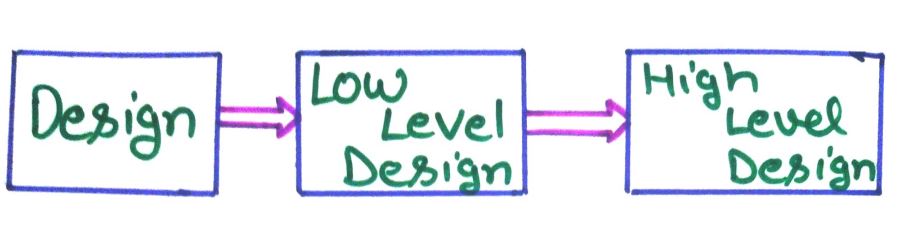
Overall Design
The design process starts with defining the overall structure of the system. Architectural decisions are taken regarding system components, technology stack, data flow, and interaction between different modules. This step provides a clear technical direction for the development team.
High-Level Design (HLD)
High-Level Design represents the abstract view of the system. It focuses on identifying major modules and explaining how these modules interact with each other. At this level, internal coding details are not discussed.
High-Level Design mainly covers:
- System architecture
- Major modules and their responsibilities
- Data flow between components
- External interfaces and databases
HLD helps stakeholders and developers understand the system structure and ensures that the design aligns with business and technical requirements.
Low-Level Design (LLD)
Low-Level Design provides a detailed and technical description of each module defined in the High-Level Design. It breaks modules into smaller components such as classes, functions, and methods.
Low-Level Design includes:
- Detailed class and object design
- Algorithms and logic for each module
- Database tables and relationships
- Input, output, and validation details
LLD serves as a direct reference for developers during the coding phase, reducing ambiguity and development errors.
Importance of System Design
System design plays a crucial role in the success of a software project. A well-defined design improves performance, reduces development risks, and makes future maintenance and upgrades easier.
3. Implementation (Coding)
The implementation phase is the stage where the actual software is built by converting the approved design into executable source code. In this phase, developers start writing programs according to the system design documents, module specifications, and technical requirements defined earlier.

As shown in the diagram, implementation begins with development, where individual modules are created. Developers strictly follow coding standards to ensure that the code remains clean, consistent, and easy to understand. Proper naming conventions, indentation, and documentation are maintained so that the code can be easily read and modified in the future.
The next focus is on creating scalable code. Scalability ensures that the software can handle growth in users, data, or functionality without major changes. Well- structured logic and modular programming techniques help the system adapt to future needs.
Version control plays a crucial role during implementation. Tools such as Git allow multiple developers to work on the same project simultaneously while keeping track of changes. Version control helps manage code history, avoid conflicts, and restore previous versions if needed.
Finally, code review is performed to verify code quality. Senior developers or team members review the code to detect errors, improve performance, and ensure that best practices are followed. This step reduces defects and improves overall reliability before the software moves to the next phase.
Each module is usually tested individually during implementation to ensure correct functionality. A well-executed implementation phase results in stable, efficient, and maintainable software that closely matches the original design and requirements.
4. Testing
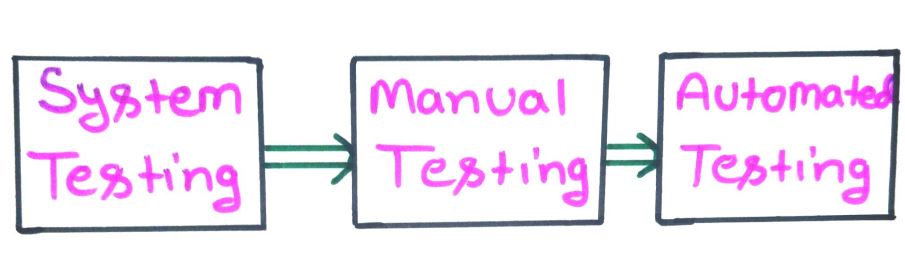
Testing is a crucial phase of the Software Development Life Cycle (SDLC) that focuses on verifying and validating the developed software. The main goal of testing is to ensure that the system functions correctly, meets user requirements, and is free from defects before deployment.
As illustrated in the diagram, testing is performed in a structured manner, starting with system-level validation, followed by manual testing techniques, and finally automated testing for efficiency and consistency.
System Testing
System testing evaluates the complete and integrated software system as a whole. All modules are tested together to verify that the system behaves according to the Software Requirement Specification (SRS). This step ensures correct data flow, interface interaction, and overall functionality.
Manual Testing
In manual testing, testers execute test cases without using automation tools. Testers act as end users and check each feature of the application manually. This method is useful for detecting usability issues, interface problems, and unexpected user behavior.
Automated Testing
Automated testing uses scripts and testing tools to execute test cases automatically. It is especially effective for repetitive tasks, regression testing, and performance testing. Automation improves test coverage, reduces human error, and saves time in large projects.
A well-planned testing phase improves software quality, increases reliability, and builds confidence before the software is released to users. Testing also reduces maintenance cost by identifying defects at an early stage.
5. Deployment
Deployment is the phase of the Software Development Life Cycle in which the tested and approved software is released into the real user environment. This phase marks the transition of the software from the development team to actual end users, where it starts delivering real value.
Before deployment, the software is prepared for release by configuring system settings, databases, servers, and network resources. Depending on the project requirements, deployment may be carried out in a single release or in multiple stages to reduce risk.
Deployment Strategies
Different deployment approaches are used based on system size, complexity, and business needs:
-
Direct Deployment:
The old system is completely replaced by the new system at once. This method is fast but risky if unexpected issues arise. -
Parallel Deployment:
Both old and new systems run together for a certain period. This allows users to switch back to the old system if problems occur, ensuring safety. -
Phased Deployment:
The software is deployed gradually in stages or modules. This approach reduces risk and allows easier issue detection. -
Pilot Deployment:
The system is first deployed to a small group of users. Feedback is collected before full-scale release.
Activities Performed During Deployment
Deployment is not limited to releasing the software; it involves several supporting activities to ensure smooth adoption:
- Installation and configuration of software on user systems
- Database setup and data migration
- User training and orientation sessions
- Preparation and delivery of user manuals and documentation
- Monitoring system performance after release
A successful deployment ensures minimal disruption to users, smooth system transition, and immediate usability. Proper planning during this phase reduces downtime, increases user confidence, and sets the foundation for long-term system stability.
6. Maintenance
Maintenance is the longest and most continuous phase of the Software Development Life Cycle (SDLC). After the software has been successfully deployed and is in regular use, it requires ongoing attention to ensure that it continues to function correctly and efficiently. This phase focuses on keeping the software up to date and aligned with user expectations and business goals.
During maintenance, developers fix bugs and errors that were not detected during earlier phases, optimize system performance, and enhance existing features. It also involves making changes to adapt the software to new operating systems, hardware platforms, security threats, and regulatory requirements. User feedback plays a critical role in identifying areas for improvement.
Maintenance activities are generally classified into corrective maintenance (bug fixing), adaptive maintenance (adjusting to environmental changes), perfective maintenance (improving performance or usability), and preventive maintenance (reducing future risks). Effective maintenance ensures that the software remains reliable, secure, and useful throughout its operational life, thereby maximizing return on investment and user satisfaction.
Objectives of SDLC
-
Deliver Robust and High-Quality Software:
The primary objective of the Software Development Life Cycle is to produce software that performs reliably under real-world conditions. Each phase of SDLC focuses on identifying and eliminating errors early so that the final system is stable, secure, and capable of delivering consistent performance. Emphasis is placed on quality standards, testing, and validation to ensure the product meets professional and technical expectations. -
Fulfill User and Business Requirements:
SDLC aims to clearly understand user needs and business goals before development begins. By carefully analyzing requirements and documenting them, the development team ensures that the software solution aligns perfectly with user expectations and organizational objectives, reducing the risk of misunderstandings and rework. -
Control Cost, Time, and Resources:
Another key objective of SDLC is effective planning and resource management. By dividing the project into structured phases, it becomes easier to estimate costs, allocate resources, and adhere to timelines. This systematic approach minimizes unexpected expenses, avoids delays, and ensures optimal use of manpower and technology. -
Enhance Project Monitoring and Management:
SDLC provides a clear framework for managing software projects. Defined phases, deliverables, and review points allow project managers to monitor progress, assign responsibilities, and track performance. This improves transparency, accountability, and communication among stakeholders throughout the development process. -
Ensure Ease of Maintenance and Future Growth:
Software developed using SDLC principles is designed to be maintainable and scalable. Proper documentation, modular design, and standardized coding practices make it easier to update, enhance, or fix the system after deployment. This ensures that the software can evolve with changing user needs and technological advancements.
Importance of SDLC
SDLC plays a vital role in the success of software projects. It provides a systematic approach that minimizes risks and improves predictability.
By following SDLC, organizations can reduce development errors, improve communication, and enhance customer satisfaction. It also ensures better documentation and long-term support for software systems.
Advantages of Software Development Life Cycle
-
Well-Organized and Systematic Development Process:
The Software Development Life Cycle offers a step-by-step approach that brings structure and clarity to the entire development process. By following clearly defined phases such as planning, analysis, design, development, testing, and maintenance, teams can work in an organized manner, reducing confusion and ensuring that every activity is performed in a logical sequence. -
Enhanced Software Quality and Reliability:
One of the major advantages of SDLC is its strong focus on quality at every stage. Continuous reviews, testing procedures, and validation checks help detect errors early. This results in software that is more reliable, efficient, and aligned with industry standards, ultimately increasing user satisfaction. -
Reduced Project Risks and Failures:
SDLC minimizes project risks by identifying potential problems during the early phases of development. Thorough requirement analysis and design planning help prevent costly mistakes later. As a result, unexpected failures, budget overruns, and schedule delays are significantly reduced. -
Improved Communication and Team Coordination:
With clearly defined roles, responsibilities, and deliverables, SDLC promotes effective collaboration among developers, testers, managers, and clients. Each team member understands their tasks and timelines, leading to smoother coordination, better communication, and increased productivity throughout the project lifecycle. -
Simplified Maintenance and Future Enhancements:
SDLC encourages proper documentation and standardized development practices. This makes the software easier to understand, maintain, and modify after deployment. Future updates, bug fixes, or feature enhancements can be implemented efficiently without affecting the stability of the existing system.
Limitations of SDLC
-
Time-Intensive Development Process:
One of the main limitations of the Software Development Life Cycle is that it can be time-consuming. Each phase requires detailed planning, analysis, and documentation before moving to the next stage. While this improves accuracy and quality, it can slow down development, especially when quick delivery is expected or when market demands change rapidly. -
Limited Flexibility in Traditional Models:
Many traditional SDLC models follow a rigid and sequential approach. Once a phase is completed, making changes later can be difficult and costly. This lack of flexibility makes SDLC less suitable for projects where requirements change frequently or where continuous user feedback is required during development. -
High Effort and Resource Requirement in Early Stages:
The initial phases of SDLC, such as requirement analysis and system design, demand significant effort, skilled manpower, and resources. Extensive documentation and planning must be completed before actual development begins, which may increase upfront costs and workload for the development team. -
Not Suitable for Small or Simple Projects:
Applying the complete SDLC framework to small-scale or simple applications can be unnecessary and inefficient. The overhead of documentation, formal reviews, and multiple phases may outweigh the benefits, making lightweight development approaches more practical for such projects.
Conclusion
The Software Development Life Cycle is a fundamental concept in software engineering that ensures disciplined, reliable, and efficient software development. By following SDLC, organizations can deliver high-quality software that meets user expectations and adapts to future changes.
A strong understanding of SDLC is essential for students and professionals, as it forms the foundation of modern software development practices.